Flagship Report

Explore the latest data from Women, Business and the Law and previous editions of the report. 

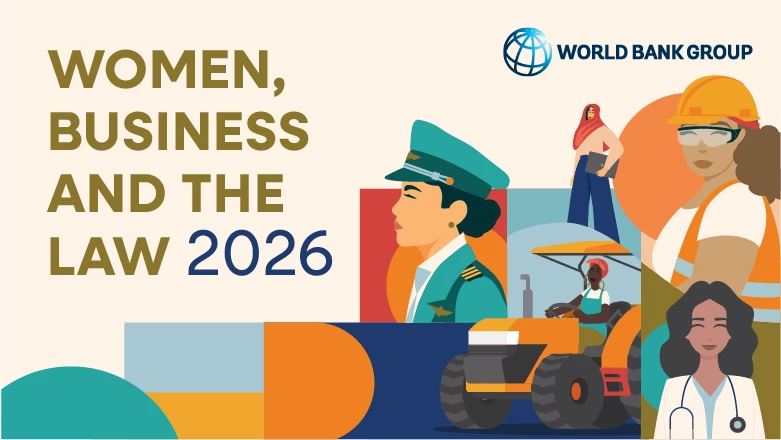
Women, Business and the Law 2026

Women, Business and the Law 2026 is the eleventh edition of a global study that assesses the enabling environment for women’s economic opportunity across 190 economies. This year’s report further expands its scope beyond measuring laws (de jure) to present a consolidated framework built on three pillars: legal frameworks, supportive frameworks, and enforcement perceptions (de facto). Women, Business and the Law 2026 provides comprehensive data for each pillar across 10 key topics shaping women's access to jobs and entrepreneurship.


Main Messages

Women, Business and the Law 2026 shows that barriers keeping women from contributing fully to growth and prosperity are far higher than previously thought. The report reveal a marked imbalance among equal laws, the policies designed to implement them, and their enforcement. 

  • Legal equality remains out of reach for every woman in the world. Only 4% of women live in countries close to full legal equality. 
  • None of the 190 economies assessed grants women equal economic opportunities. Women enjoy only two-thirds of the legal rights of men worldwide. 
  • Even where gender‑equal laws exist, weak systems and limited enforcement create a persistent gap between law and practice. Globally, fewer than half of the policies and institutions needed for women to exercise their rights are in place.
  • Perceptions of uneven enforcement further widen the gap between legal rights and implementation. Legal experts surveyed worldwide estimate that laws supporting women’s economic participation are enforced only halfway.
  • Progress toward legal gender equality is advancing across regions. Between 2023 and 2025, 68 economies enacted 113 legal reforms strengthening women’s economic opportunities.

By examining laws, policies, and enforcement, Women, Business and the Law 2026 offers a comprehensive view of the factors shaping women’s economic decisions throughout their working lives. The study equips economies with evidence needed not only to assess the state of women’s economic rights, but also to identify where action is most urgent.
Key sections

The 2026 edition introduces new measurements of legal gender equality and updates data across 10 areas of women’s economic participation. Data are current as of October 1, 2025.

Full report available February 24.

Chapter 1 – Women, Business and the Law and Women’s Access to Jobs and Inclusive Growth

Chapter 1 explores how barriers rooted in human capital gaps, social norms, and legal constraints limit women’s economic participation and in turn, how addressing these barriers can boost productivity, job creation, and inclusive growth. It highlights how Women, Business and the Law serves as a diagnostic tool to guide reforms that expand women’s access to jobs and strengthen economies.


Chapter 2 – Women, Business and the Law 2.0: A New Frontier for Measuring Access to Jobs

Chapter 2 outlines the new Women, Business and the Law 2.0 index and methodological innovations introduced in the 2026 report edition to provide a more complete and comparable picture of women’s economic opportunities across 190 economies.


Chapter 3 – The State of Women’s Economic Rights

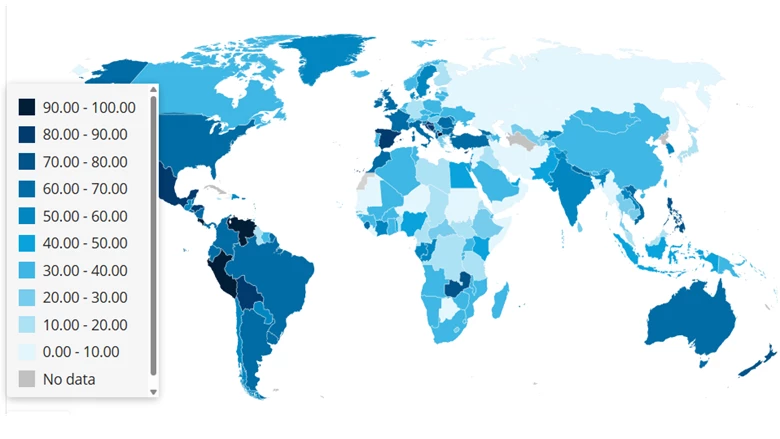
Chapter 3 presents the state of women’s economic rights in 2026, revealing that globally, women still hold only about two thirds of the legal rights of men and that supportive systems and enforcement remain far weaker than laws on the books. It highlights where gaps are widest across regions, income groups, and topics, and underscores promising reforms towards legal gender equality around the world.

Related Research

Past Reports

Women, Business and the Law 2024

Women, Business and the Law 2024 is the tenth in a series of annual studies measuring the enabling environment for women’s economic opportunity in 190 economies. This year, the study presents two sets of data: Women, Business and the Law 1.0 and an expanded version, Women, Business and the Law 2.0. 

Women, Business and the Law 1.0 updates its index of eight indicators. Women, Business and the Law 2.0 introduces a new framework for measuring the implementation gap. It analyzes laws—de jure— and examines the existence of frameworks supporting implementation of the law and gauges experts’ opinions on the outcome of the law for women—de facto. Women, Business and the Law 2.0 introduces two new indicators – Safety and Childcare – and revises its ongoing indicators. 

Women, Business and the Law 2023

 Women, Business and the Law 2023 is the ninth in a series of annual studies measuring the laws and regulations that affect women’s economic opportunity in 190 economies. It identifies barriers to women’s economic participation and encourages reform of discriminatory laws. This year, the study also includes research, a literature review, and analysis of 53 years of reforms for women’s rights and makes an important contribution to research and policy discussions about the state of women’s economic empowerment.

Women, Business and the Law 2022

Women, Business and the Law 2022 is the eighth in a series of annual reports measuring the laws and regulations that affect women’s economic opportunity in 190 economies. Women, Business and the Law makes the case for reform toward gender equality and highlights the way toward a more equitable and prosperous world. This year, the report also includes important pilot research on the legal frameworks surrounding the availability, affordability, and quality of childcare, and preliminary results of pilot efforts to examine the implementation of the laws measured by the Women, Business and the Law indicators.

Women, Business and the Law 2021

Women, Business and the Law 2021 is the seventh in a series of annual reports measuring the laws and regulations that affect women’s economic opportunity in 190 economies. Amidst a global pandemic that threatens progress toward gender equality, the report identifies barriers to women’s economic participation and encourages reform of discriminatory laws. This year, the report also includes important findings on government responses to the COVID-19 crisis and pilot research related to childcare and women’s access to justice.

Women, Business and the Law 2020

Women, Business and the Law 2020 analyzes laws and regulations affecting women's economic inclusion in 190 economies. While celebrating the progress made, the data and analysis emphasize the work still to be done to ensure economic empowerment for all.

Women, Business and the Law 2019: A Decade of Reform

This study examines ten years of Women, Business and the Law data through an index structured around economic decisions women make as they go through different stages of their working lives.

Women, Business and the Law 2018
Women, Business and the Law 2016: Getting to Equal
Women, Business and the Law 2014: Removing Restrictions to Enhance Gender Equality
Women, Business and the Law 2012: Removing Barriers to Economic Inclusion
Women, Business and the Law 2010: Measuring Legal Gender Parity

Explore More WBL Publications

Explore More WBL publications, including research papers, policy briefs, and blogs, analyzing how laws shape women’s economic opportunities worldwide.