Our Impact

We deliver data and analysis that drive reforms to remove legal barriers that limit women’s economic opportunities. By informing reforms, our work supports private sector development and economic growth.

120+

World Bank operations use our data to inform legal reforms and policies

190

Economies are assessed annually

2,000+

Legal reforms have been recorded through our work globally over 50+ years

400,000+

Legal data points power evidence-based policy and measurable change


Stories from Client Countries

Producing the data that our operational partners across the World Bank Group and in client countries use to design job-focused interventions and drive reforms at scale

The State Agency for Vocational Education of the Republic of Azerbaijan.

Azerbaijan: Opening doors to 674 professions

For decades, women in Azerbaijan were barred by law from hundreds of jobs labeled “dangerous,” regardless of their skills or experience.

Women, Business and the Law data showed that 674 jobs were legally closed to women, barring them from highly remunerated employment. That evidence helped drive reform. 

The updated labor code of 2022 removes those restrictions while upholding safe working conditions for everyone, expanding women's access to better jobs, higher pay, and more secure work—strengthening both families and the economy.

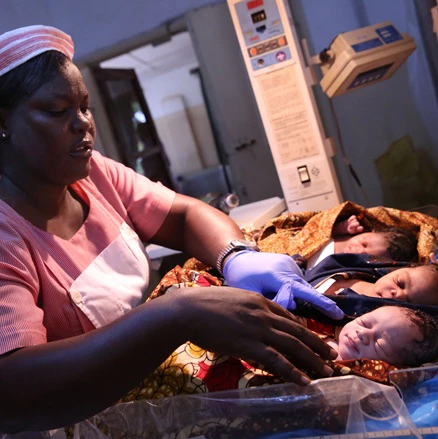
Fatmata Bamorie Turay (far left) and Elizabeth Tumoe, registered nurses look after newborns at the Princess Christian Maternity Hospital, in Freetown Sierra Leone on June 18, 2015. Photo © Dominic Chavez/World Bank

Sierra Leone: Changing the rules at work

In Sierra Leone, women faced job discrimination, unequal pay, and no legal right to parental leave.

Women, Business and the Law data helped show where the law held women back. With World Bank support and advocacy from civil society, the government acted.

In 2023, a new employment act banned job discrimination, required equal pay for equal work, and added parental leave—raising standards at work and opening more jobs and opportunity for women.

Hebba Abdel Razaaq. Secretary.  Jordan.

Jordan: Making jobs safer and fairer

In Jordan, data from Women, Business and the Law showed how the law was limiting women’s access to work and leaving many without basic protections. 

That evidence helped shape legal reforms that lifted restrictions on women’s work in industrial jobs, banned gender discrimination in employment, and prohibited workplace sexual harassment. 

Together, these changes made workplaces safer and the labor market more open—helping more women enter the workforce and move into better, more secure jobs.

How We Make a Difference

Turning Law into Data

What Gets Measured Can Get Changed.

3.9 billion women live under laws that limit their economic opportunities. We make those limits visible—and fixable.

Our work turns complex legal systems into clear, comparable data across 190 economies. Each year, we publish the global benchmark on the laws and policies that shape whether women can work, start a business, and build careers.

Our flagship report, data, and country profiles equip policy makers, governments, and World Bank teams with proof they can act on.

Our data sets the global standard. It also contributes to the UN’s official measure of legal equality under SDG 5.1.1 and shows leaders exactly what must change, and where.


Setting a Global Benchmark for Legal Reform

Creating the evidence base leaders need for smart policies fueling growth.

Our work has recorded more than 2,000 legal reforms across 190 economies over 50+ years—turning legal change into proof of what works.

Using a rigorous, transparent, and replicable methodology, we track the laws that shape women’s economic lives—from safety and pay to childcare and pensions—the same way in every country economy. This makes the legal baseline comparable and results measurable.

Leaders use our data to see which reforms are needed to deliver results. Governments use it to design better laws. The private sector uses it to assess risk and opportunity. Researchers use it to link gender-equal laws to higher employment, more entrepreneurship, and smaller wage gaps.


Transforming Laws from Paper to Practice

Economic growth does not come from laws alone. It comes from laws that are applied—and backed by smart policy.

That is why, as of 2024, our work goes beyond tracking only legal reforms for women’s economic empowerment. We now look beyond laws “on the books” to measure how well countries put those laws into practice—by assessing the policies, programs, and institutions that support implementation, and by capturing expert views on how laws are enforced.

With our expanded framework, we also broaden the scope of what we measure and include areas such as safety and childcare that shape women’s ability to participate in the labor force.

This helps countries spot the implementation gap and design full reform packages that move from passing laws on paper to delivering results on jobs, investment, and growth.


Driving Change through Global Engagement

Our impact is built by showing up where it counts.

We invest in outreach and engagement to make sure our evidence is used. Through global and country launches, hands-on training, methodology workshops, and direct dialogue with governments, businesses, and civil society, we bring data into the rooms where decisions are made.

Open data, country profiles, and clear visual tools support this engagement—but the real value is in the conversations they enable. This active approach turns our work from a dataset into a platform for action, emphasizing legal and policy reform at the center of strategies for growth, investment, and private sector development.


More About Us

Women, Business and the Law is a World Bank Group flagship initiative providing comparable data on laws and policies in 190 economies that shape women’s economic participation and drive growth.